Youth4Climate Adaptation Action Day 2025
 solo
soloEmpowering Schools for Local Climate Action (ESLCA)
Project Overview
GoGreen commemorated the Youth4Climate Adaptation Action Day 2025 at Bristow Secondary School in Gboko, Benue State, Nigeria, on 13th October 2025. The initiative, tagged “Empowering Schools for Local Climate Action (ESLCA),” was organized in alignment with the broader theme “NDCs, NAPs, Youth, and Adaptation.” Celebrated globally in over 100 countries.
The initiative represents GoGreen’s commitment to promoting climate awareness/education, students’ participation, and community-driven adaptation strategies. With over 160 students, teachers, and stakeholders in attendance, the event was among the most impactful youth-focused climate engagements in Benue State in 2025.


Project Goal
The Youth4Climate Adaptation Action Day 2025 was designed to strengthen students’ awareness of climate change adaptation and resilience strategies while localizing Nigeria’s climate commitments under its Nationally Determined Contributions (NDCs) and National Adaptation Plans (NAPs). The initiative positioned schools as active hubs for climate leadership and community transformation, empowering students to become climate ambassadors capable of influencing sustainable behavior within and beyond their communities. With this, GoGreen Environmental Health Sustainability Initiative affirms its belief that young people are not just future leaders but present-day change agents whose everyday actions, such as tree planting, recycling, biodiversity protection, and environmental advocacy, contribute meaningfully to national and global climate goals.
Activities and Impact
1. Climate Education and Student Engagement
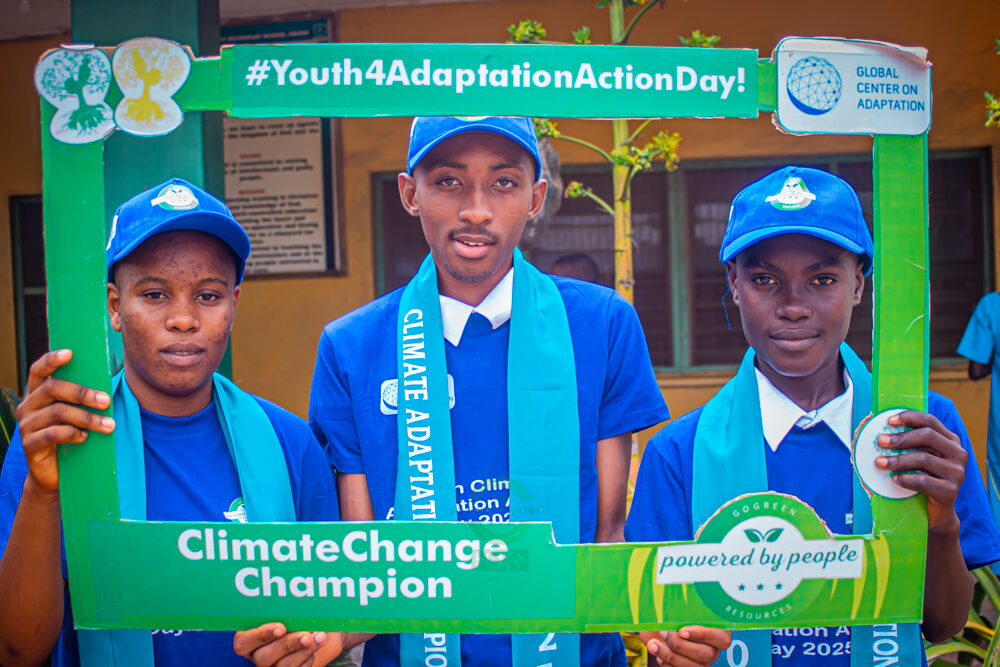
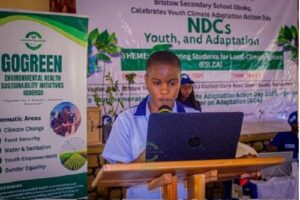
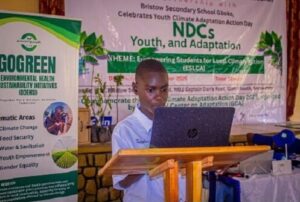
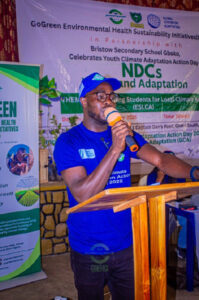
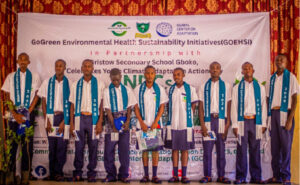
Students were invited to discuss what they truly understand about climate change through essay presentations; this was the event’s highlight, and selected students were crowned Climate Ambassadors. This exercise strengthened students’ understanding of climate mitigation and adaptation while sharpening their critical thinking and public speaking skills. It also provided a platform for youth voices to be heard in climate discourse.

2. Climate Sensitization on Nigeria’s NDC Priorities
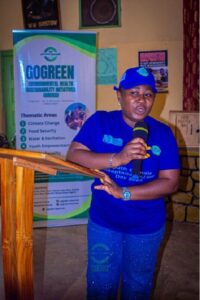
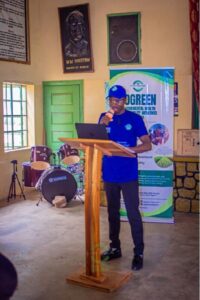
A sensitization and awareness session was conducted on the year’s theme, “NDCs, NAPs, Youth, and Adaptation.” The discussion explored key priority areas, including the transition to renewable energy, afforestation and reforestation, reduced dependence on fossil fuels, sustainable agriculture, and improved waste management practices.
Students were encouraged to translate Nigeria’s national climate commitments into practical, school-based adaptation actions such as responsible waste management, tree planting, and nurturing green spaces. The highly interactive session stimulated meaningful participation, deepened climate literacy, and strengthened students’ understanding of how national climate policies connect to community-level action.
3. Unveiling of the GoGreen Climate Justice Club
For sustainability purposes continues climate participation, GoGreen Climate Justice Club was unveiled to serve as a youth-led platform promoting continuous climate education, tree planting and nurturing, sustainability campaigns, and environmental advocacy. By institutionalizing climate action within the school system, GoGreen ensured that the impact of the event extends beyond a single day into long-term behavioral and cultural transformation.
4. Recognition of Climate Champions
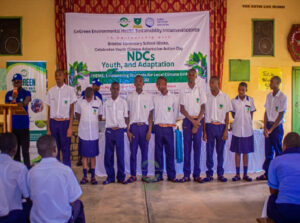
Outstanding students were recognized as Climate Champions for their zeal and insight during the essay presentations.
The recognition motivated students to sustain their advocacy roles and positioned them as peer leaders driving environmental responsibility within the school and the surrounding community.


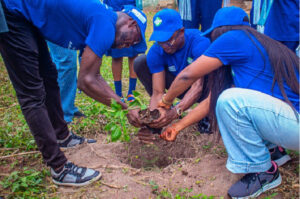
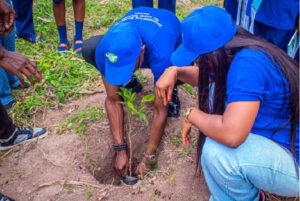
5. Tree Planting Exercise
To practicalize the day’s message, GoGreen, together with students, conducted a tree planting exercise within the school compound.
The planted trees symbolize growth, resilience, and shared environmental responsibility. Beyond symbolism, they contribute to carbon sequestration, improved air quality, and enhanced school aesthetics, demonstrating adaptation in action.